

The Hidden Cost of Food Waste — And the Role of Worms

When you throw food into the bin, it disappears from sight. But it doesn’t disappear from impact.
Behind every discarded apple core, forgotten spinach bunch, or scraped dinner plate lies a chain of hidden costs — environmental, financial, and ecological. And this is where earthworms quietly step in.
Let’s uncover the true cost of food waste — and how worm farming turns a problem into a solution.

🌍 The Environmental Cost
Food waste is not just “waste.”
It represents:
Land used to grow crops
Water used for irrigation
Fuel used for transport
Energy used for storage and refrigeration
When that food ends up in landfill, it decomposes without oxygen and produces methane — a potent greenhouse gas.
Organic waste is one of the largest contributors to landfill emissions globally.
Every piece of food waste buried is a missed opportunity for regeneration.
💧 The Water Cost
Water is one of South Africa’s most precious resources.
Consider this:
A single apple can require around 70 litres of water to grow.
A kilogram of vegetables may require hundreds of litres.
When food is thrown away, all of that embedded water is wasted too.
Worm farming ensures those nutrients and embedded resources return to soil instead of becoming pollution.
💸 The Financial Cost
Food waste also affects household budgets.
Most families don’t realise how much they throw away over time.
Small daily scraps add up to:
Lost grocery spend
Higher waste collection volumes
Increased municipal processing costs
When you compost with worms, you transform that waste into something valuable:
Free fertiliser
Improved garden yields
Healthier soil
It’s not just environmentally smart — it’s financially sensible.
🌱 The Soil Cost
Modern agriculture has degraded much of the world’s soil.
When food waste goes to landfill instead of back to soil:
Nutrients are removed from natural cycles
Soil organic matter declines
Fertility decreases
We extract from soil, but fail to replenish it.
Worm composting restores that balance.
🪱 The Role of Worms
Earthworms are nature’s recyclers.
In a worm farm:
Food scraps are broken down by microbes.
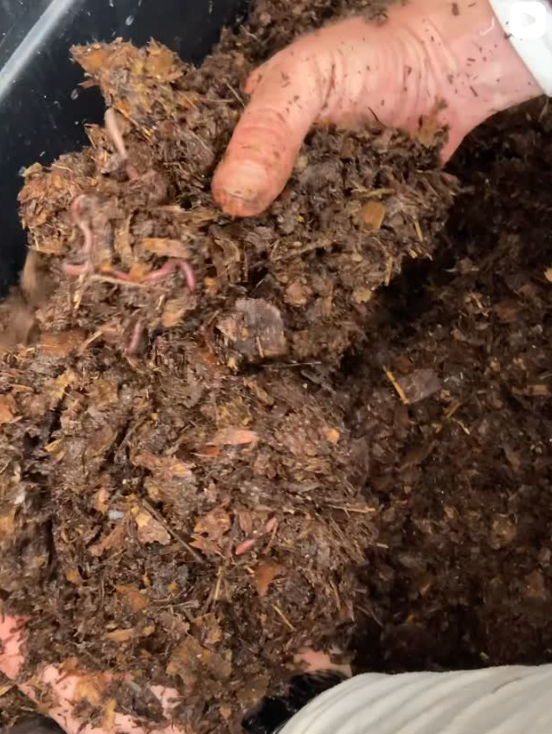
Worms consume the material.
Castings are produced — rich in nutrients and microbial life.
Instead of methane, you get:
Nitrogen-rich vermicast
Carbon-building organic matter
Soil-enhancing biology
The same banana peel that would have produced greenhouse gas in landfill becomes soil nourishment in your garden.
🔁 Closing the Loop
Food waste becomes a problem when we break the natural cycle.
In nature:
Food waste → Decomposers → Soil → Plants → Food again.
Worm farming restores that loop.
It’s not about eliminating waste entirely.
It’s about redirecting it.
🏡 What This Means for Your Household
When you compost with worms, you:
Reduce your black bin volume
Lower landfill emissions
Produce natural fertiliser
Improve garden health
Participate in regeneration
It’s a simple shift with a meaningful ripple effect.
💚 The Compost Kitchen’s Mission
At The Compost Kitchen, we see food waste differently.
It’s not rubbish.
It’s potential.
Through earthworm farming and vermicomposting, we transform household and community food waste into high-quality compost that rebuilds soil and reduces landfill pressure.
Whether you:
Start your own worm farm
Join our collection service
Use our vermicast in your garden
You’re part of a regenerative system.
Final Thought
The true cost of food waste is hidden — until you see the bigger picture.
Once you understand the impact, it’s hard to throw scraps away without thinking twice.
The good news?
You don’t have to.
Because with worms, what once felt wasteful becomes restorative.
And that shift changes everything.


Comments