

How to Insulate Outdoor Worm Farms in Cold Weather

If your worm farm lives outside — on a patio, balcony, or in the garden — winter requires a little extra care.
Composting worms are resilient, but they are not frost-proof. When temperatures drop too low, their activity slows dramatically, and in extreme cold, colonies can collapse.
The good news? Insulating an outdoor worm farm is simple, affordable, and highly effective.
Here’s how to protect your worms and keep your system stable through cold weather.

❄️ Why Insulation Matters
Worms thrive between 15°C and 25°C.
When outdoor temperatures fall:
Worm metabolism slows
Feeding reduces
Reproduction decreases
Risk of stress increases
Insulation doesn’t need to make the bin warm — it simply needs to prevent extreme temperature swings.
💡 Stability is more important than heat.
🪵 1. Move It to the Most Protected Spot
Before adding insulation, consider relocation.
Ideal winter spots:
✅ Against a north-facing wall (sun exposure during the day)
✅ Under a roof or covered patio
✅ Inside a garage or shed
✅ Away from strong wind
Avoid:
❌ Direct exposure to frost
❌ Sitting directly on cold concrete
❌ Open, windy corners
Even moving your bin 1–2 metres can significantly change temperature exposure.
📦 2. Insulate the Sides
You don’t need expensive materials. Everyday items work perfectly.
Use:
Cardboard sheets
Old blankets
Bubble wrap (around the outside only)
Foam panels
Hessian sacks
Wrap the outside of the bin, not the inside.
💡 Never block air holes — worms still need oxygen.
🍂 3. Add Extra Bedding Inside
Internal insulation is just as important.
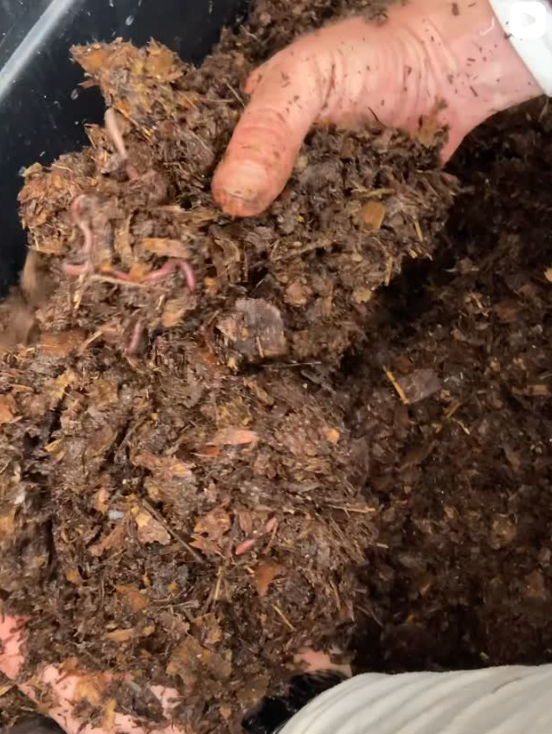
Add a thick top layer of:
Shredded cardboard
Dry leaves
Coconut coir
This acts like a thermal blanket, protecting the worms below.
In winter, your bedding layer can be thicker than usual.
🪜 4. Lift the Bin Off the Ground
Cold concrete absorbs heat from the bin.
Place your worm farm on:
Wooden pallets
Bricks
A thick piece of wood
Rubber mats
This reduces heat loss from the base.
💡 Elevation improves both temperature and airflow.
🌡️ 5. Monitor Temperatures
If you want extra precision, use a simple compost thermometer.
You don’t need exact readings — just awareness.
If internal temperature drops below 10°C consistently, increase insulation or relocate.
☀️ 6. Use Natural Heat When Available
Winter sun is gentle but helpful.
If possible:
Allow morning sun exposure
Avoid harsh afternoon heat swings
Keep the lid closed at night
Small daily warmth gains add up.
🚫 What NOT to Do
❌ Do not use electric heaters directly in the bin
❌ Do not seal the bin airtight to trap heat
❌ Do not overfeed to “generate warmth”
Overfeeding in winter creates moisture imbalance and smell.
🪱 What to Expect Even with Insulation
Even well-insulated worm farms:
Process food more slowly
Produce fewer castings
Show less visible worm movement
That’s normal.
Insulation prevents damage — it doesn’t force summer-level productivity.
🌱 Why Winter Care Pays Off
Protecting your worm farm through winter means:
You don’t lose your colony
Spring reproduction resumes quickly
Compost production accelerates sooner
You avoid restarting from scratch
It’s far easier to maintain a colony than rebuild one.
💚 The Compost Kitchen Approach
At The Compost Kitchen, we carefully manage temperature and insulation in our vermiculture systems to ensure stable worm health year-round.
If you’re unsure whether your outdoor setup is winter-ready, we’re happy to guide you — or handle the composting process for you.
Final Thought
Worm farming follows the rhythm of the seasons.
Winter isn’t about growth — it’s about protection.
Wrap the bin. Add bedding. Lift it off the ground. Stay observant.
And when spring returns, your worms will reward your care with renewed energy — and beautiful, living compost.


Comments