

What’s Next for Composting? Trends & Innovations in Sustainability

Composting has come a long way from the simple backyard pile. Once considered niche or old-fashioned, it’s now recognised as a key solution to climate change, soil degradation, and food waste. And as more individuals, businesses, and cities embrace composting, exciting innovations are taking root.
In this blog, we explore what’s on the horizon for composting—emerging trends, technologies, and ideas that are transforming how we turn waste into life.

🔄 1. The Rise of Circular Composting Systems
Composting is no longer just a personal eco-habit—it’s becoming part of larger closed-loop systems that connect waste, soil, and food.
We’re seeing:
✅ Neighbourhood compost hubs serving multiple households
✅ Restaurants composting food waste and using it to grow their own produce
✅ Urban farms powered entirely by composted city waste
💡 This trend is about keeping nutrients in the local ecosystem, reducing transport, and creating self-sustaining communities.
🪱 2. Vermicomposting Goes Mainstream
Once reserved for die-hard gardeners, vermicomposting (composting with earthworms) is now being adopted by:
✅ Schools and learning centres
✅ Apartment dwellers with limited space
✅ Businesses looking to reduce organic waste in-office
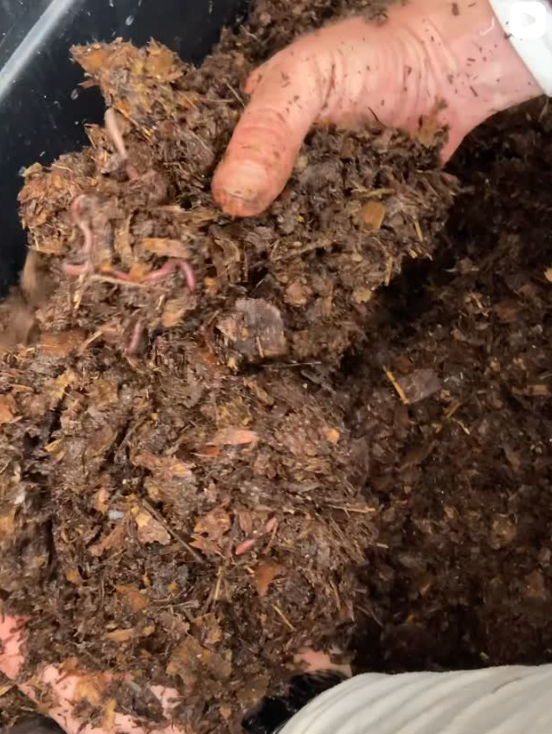
Earthworms process food scraps quickly, odourlessly, and cleanly—making composting more accessible to urban households.
💡 At The Compost Kitchen, we use earthworms to process food waste into high-quality vermicompost—rich in microbial life and plant nutrients.
🧠 3. Smart Composting Technology
Tech is meeting composting in surprising ways.
Emerging tools include:
✅ Smart compost bins that monitor moisture, temperature, and progress
✅ Apps that track your food waste diversion and environmental impact
✅ QR codes on compost bins to educate users or report contamination
💡 These tools are helping make composting more precise, measurable, and scalable—especially in shared or urban settings.
📈 4. Government Support and Policy Integration
Governments are beginning to realise composting’s value in tackling waste and climate goals.
Globally and locally, we’re seeing:
✅ Municipal compost collection services
✅ Subsidies for compost bins and worm farms
✅ Composting incentives in schools and low-income areas
💡 As composting becomes a public good, expect to see more integration into urban planning, food systems, and climate strategies.
♻️ 5. Composting in the Circular Economy
Compost isn’t just a way to manage waste—it’s a resource in regenerative economies.
✅ Organic waste from homes and businesses becomes a sellable product
✅ Compost strengthens food systems by restoring soil fertility
✅ Community gardens and farmers can grow more sustainably using local compost
💡 The more we compost, the more we shift from extract-and-discard systems to renew-and-regenerate models.
🧪 6. Innovations in Compost Materials and Methods
As our understanding of soil science grows, so do our composting methods.
New directions include:
✅ Biochar-enhanced compost for carbon sequestration and water retention
✅ Compost inoculants to boost microbial diversity
✅ Anaerobic digestion systems for faster processing and energy recovery
💡 Composting is evolving from a passive process to a science-backed soil restoration strategy.
🌿 7. Compost as a Climate Solution
Composting doesn’t just reduce emissions by keeping food waste out of landfill. It also:
✅ Builds soil carbon—removing CO₂ from the atmosphere
✅ Improves water retention in farms and gardens
✅ Reduces reliance on synthetic fertilisers, which are carbon-intensive to produce
💡 In the face of climate change, composting is being rebranded as climate action you can do from your kitchen.
💚 What It Means for You
Whether you’re composting at home or helping your community do better, the future of composting is bright—and you’re already part of it.
You can:
✅ Try a new method (like worm farming or compost tea)
✅ Encourage your school, estate, or workplace to get on board
✅ Support composting policies and local initiatives
✅ Keep learning and sharing what works
💡 Small actions become bigger when they align with global trends—and composting is on the rise.
🌱 The Compost Kitchen Is at the Forefront of the Composting Revolution
We’re not just collecting food waste. We’re building systems, educating communities, and creating a culture of regeneration.
✅ Premium vermicompost
✅ Community compost partnerships
✅ School and estate programmes
✅ Simple, clean, and impactful
📩 Join The Compost Kitchen and step into the fu

Comments